
Professor Petra Creamer’s research explores the archaeology and history of the ancient Near East. At Emory, she brings archaeological fieldwork and digital technologies into the classroom, encouraging students to investigate the ancient world through material evidence. Recently, MESAS spoke with her about her excavations at Qach Rresh in Iraqi Kurdistan, her research on the Assyrian Empire, and the excitement of introducing students to archaeology and the questions it raises about the ancient past.
Research and fieldwork
What are your primary areas of academic research and teaching at Emory?
I study empires in the ancient Near East, particularly how they shaped the lives of ordinary people and transformed the landscapes under their control. I'm especially interested in what archaeology can tell us about the people who don't typically make it into the history books. A big part of my research involves using remote sensing technologies to investigate what's beneath the ground without having to excavate it. At Emory, I teach courses on the archaeology and history of the ancient Near East, as well as digital methods for studying the past. I love introducing students to the many ways we can piece together the lives of people who lived thousands of years ago.

What first sparked your interest in archaeology, and how did that interest develop into a scholarly pursuit?
I started out loving Greek and Egyptian mythology as a kid, and that grew into an interest in the whole ancient world pretty quickly. By the time I was twelve, I knew I wanted to be an archaeologist – my only question was if I wanted to focus in the Classical world or the Near Eastern world. In my time as an undergraduate student at Ohio State, I quickly realized how little we know about the Near East (and Mesopotamia, especially) in comparison to Greece, Rome, and Egypt, so that’s what caught my interest! What really drew me to archaeology, though, was the realization that it allows us to tell stories about people who often don't appear in written histories. We know a great deal about ancient kings, empires, and major political events, but much less about the ordinary people who lived through them. Archaeology gives us a way to investigate their experiences and understand how larger historical developments affected everyday life.

Is there a particular discovery, encounter, or memorable moment from your research journey that you would like to share?
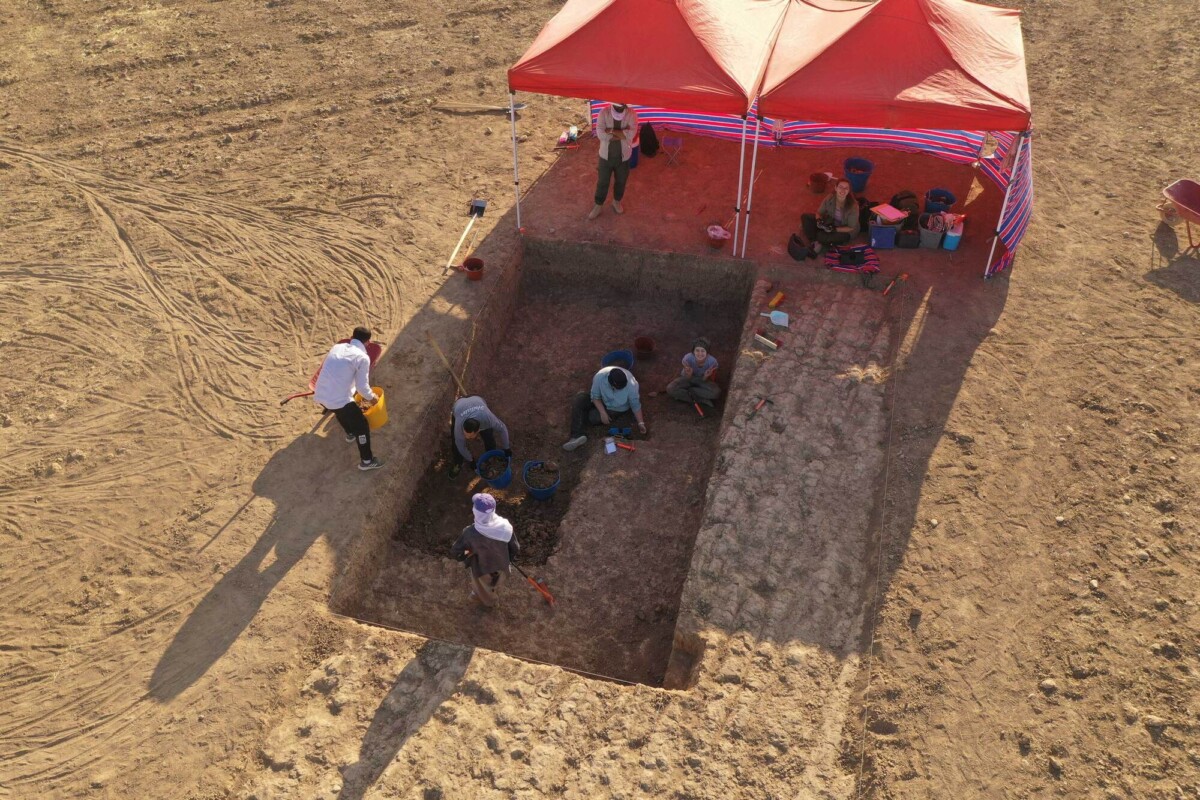
One of the most exciting moments of my career was beginning excavations at Qach Rresh, a rural archaeological site in Iraqi Kurdistan where I direct an ongoing research project. We had identified what appeared to be several large buildings through magnetic gradiometry, a technique that allows us to map buried architecture without excavating it. Seeing those buildings emerge from the ground, almost exactly where our magnetic maps predicted they would be, was incredibly rewarding. It's particularly exciting because we know surprisingly little about rural life in the core of the Assyrian Empire, despite how much we know about its kings and monumental cities. Every excavation season brings us closer to understanding what life looked like for the people who actually sustained the empire.

Teaching and working with students
How does your research find its way into the courses you teach at Emory? Are there particular materials or sources from your scholarship that you especially enjoy bringing into the classroom?
My research makes its way into my teaching constantly, particularly because archaeology is such a hands-on discipline. I regularly incorporate material from my own fieldwork, including excavation photographs, archaeological plans, remote sensing data, and artifacts, to show students how we actually reconstruct the past. In my Digital Methods course, for example, students engage with some of the same technologies and analytical approaches that we use in the field. I especially enjoy showing students how much we can learn from seemingly mundane archaeological evidence, like ceramics, animal bones, or storage facilities, and how these materials can tell us about the lives of people who rarely appear in written historical records.

What do you find most rewarding about working with students in MESAS?
Students approach the ancient Near East from all sorts of backgrounds and interests, whether archaeology, history, religion, languages, or contemporary regional studies. I particularly enjoy watching students make connections between these different approaches and realize how much they can contribute to one another. It's also incredibly rewarding to introduce students to archaeology for the first time and see them begin to think critically about how we construct our understanding of the past, whose stories we tell, and whose experiences have traditionally been left out.
What advice would you offer students who are interested in advanced studies and/or careers related to the Middle East or South Asia?
Focus on acquiring your languages and travel as often as you can. And talk with your professors!
What advice would you offer students interested in pursuing archaeology?
My biggest piece of advice is to get involved in actual archaeological research as early as possible. Archaeology is a very hands-on discipline, and there's really no substitute for experiencing fieldwork, working with artifacts, or participating in a research project. You don't necessarily have to travel halfway around the world to do that, either - there are often opportunities to work in museums, labs, or archaeological projects much closer to home.
I'd also encourage students to develop a broad range of skills and interests. Archaeology is an incredibly interdisciplinary field. On any given day, I might be working with ancient textual sources, analyzing satellite imagery, examining pottery, or using geophysical instruments to identify buried architecture. Skills in languages (both ancient and modern!), GIS, statistics, anthropology, history, and the natural sciences are all enormously valuable. And most importantly: be willing to challenge your assumptions. Some of the most interesting archaeological discoveries happen when the evidence doesn't match what we expected to find.

Looking ahead and beyond campus
Looking ahead, what are you most excited about in your teaching and research over the coming year?
I'm especially excited about continuing our excavations at Qach Rresh in Iraqi Kurdistan. Over the past few seasons, we've uncovered evidence for large-scale animal management, substantial storage facilities, and the continued use of the settlement after the collapse of the Assyrian Empire. Some of our more recent discoveries are raising entirely new questions about what happened in the Assyrian heartland after the empire disappeared, and I'm looking forward to exploring those further. I'm also working on a book that brings together archaeological and historical evidence to reconsider how the Assyrian Empire affected the people and landscapes under its control.
In teaching, one of the things I enjoy most is helping students move beyond memorizing dates, rulers, and historical events to actually thinking like archaeologists. Whether they're interpreting artifacts in a museum, working with digital archaeological data, or debating competing explanations for a problem about the past, I want students to experience the process of discovery themselves. It's always rewarding when students realize that our understanding of the ancient world isn't fixed, and that they can participate in asking new questions about it.
Beyond your research and teaching, what are some activities, interests, or hobbies that you enjoy?
Videogames! Skyrim and Stardew Valley are my favorites. I also spend time strength-training and, recently, watching Ms. Rachel with my 10-month-old (though I’m not sure that’s a hobby).